Commercial waste management across Allentown demands rigid scheduling and clear container footprint logistics to maintain active customer parking and loading docks. In tight retail layouts like the 1st Ward and the Old…
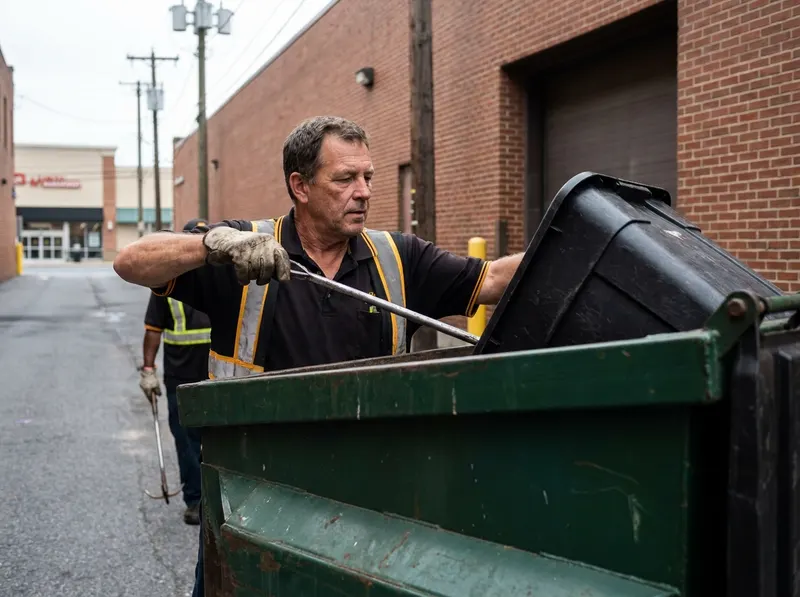
Commercial waste management across Allentown demands rigid scheduling and clear container footprint logistics to maintain active customer parking and loading docks. In tight retail layouts like the 1st Ward and the Old Allentown Historic District, narrow service alleys and restricted rear bays prevent traditional rear-load garbage trucks from operating cleanly. A dedicated 10-yard or 15-yard roll-off container fits inside a single standard parking stall, keeping loading lanes open for daily vendor deliveries without obstructing foot traffic. For larger retail cleanouts near the Ritz Center area and shopping strip renovations along 17th Street, high-volume cardboard, disassembled gondola shelving, and obsolete display units fill space rapidly without immediately maximizing weight limits, making a 20-yard or 30-yard container the practical solution.
Selecting the proper roll-off capacity depends directly on material density and site access limitations. If the project involves tenant turnover in a Midtown storefront with heavy drywall, plaster, and floor tiles, a lower-profile 10-yard or 15-yard dumpster prevents exceeding axle weight limits. If the job involves a multi-unit stockroom clearance in the West End Alliance or an inventory reset near the Trexler Park neighborhood, light but bulky corrugated boxes and merchandising racks require the vertical volume of a 30-yard container. The operational trade-off centers on loading space versus payload mass: shorter containers preserve tight loading docks but require frequent swaps during massive interior strip-outs, while larger containers demand roughly 60 feet of straight-line clearance for truck roll-off placement.
Lehigh County disposal facilities enforce strict rules against hazardous items, sealed chemical buckets, liquid paint, and commercial refrigeration units containing Freon. A commercial roll-off dumpster is self-loaded debris disposal, distinctly different from full-service junk removal where a crew handles inside lifting. Every container delivery follows a simple three-step sequence: Step 1 involves confirming the exact container footprint and protecting the asphalt or concrete surface with wood blocking. Step 2 allows your maintenance or cleanout crew to load the bin evenly up to the water-level rim. Step 3 concludes with scheduled pickup and verified transport to a certified regional processing center, ensuring every pound accounts for city-compliant transfer documentation.
Every job gets a firm, written price after a free on-site visit.
Tell us about your commercial waste and retail dumpster service job in Allentown and we'll send a clear, written quote, usually the same day.
 BinWorks Dumpster Rental